Immediate Surroundings
What burns beside a building changes the exposure it must withstand.
Combustible materials near a building can ignite, carry fire toward the structure, and increase its exposure to heat and flame.
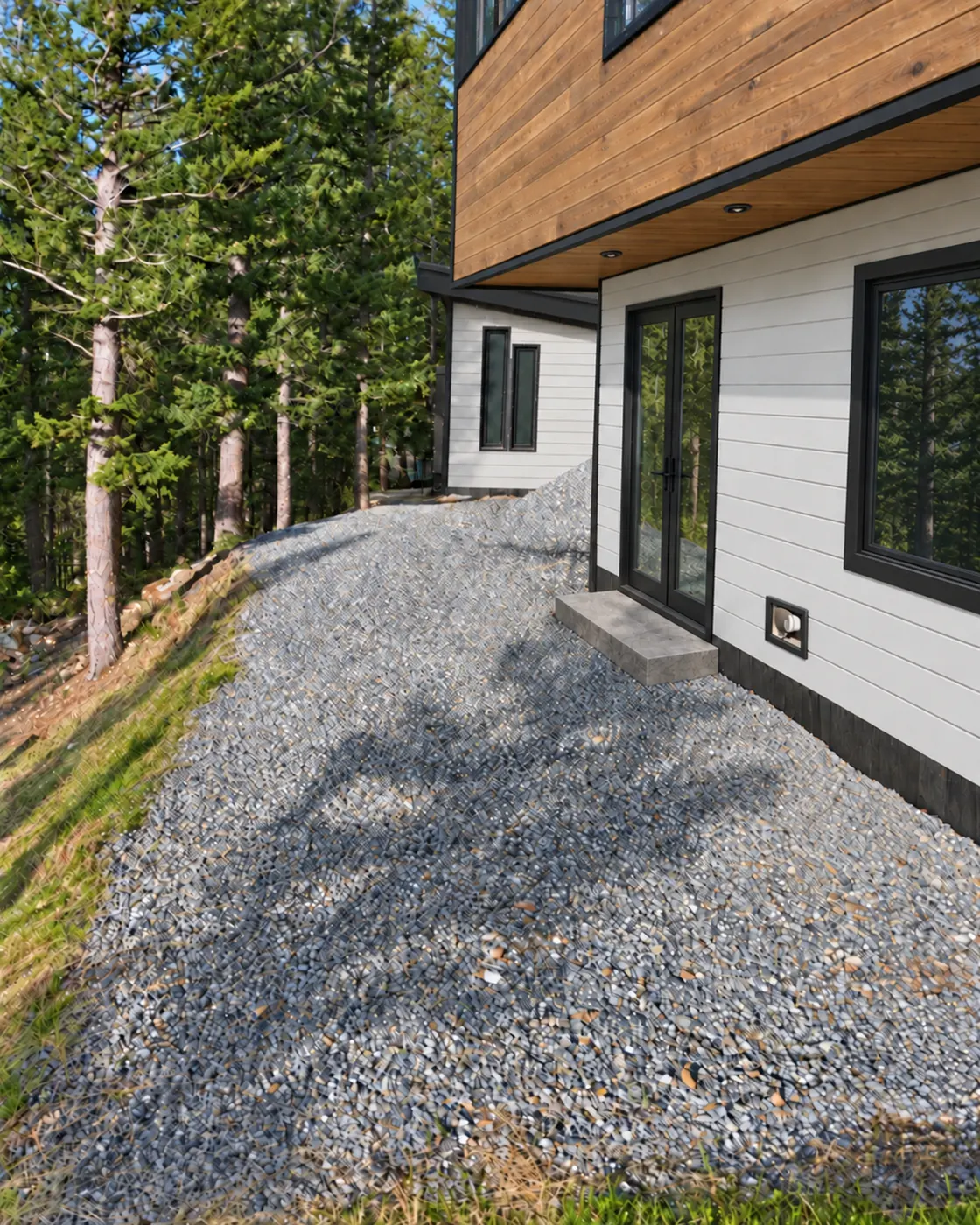
Why it matters
The area immediately around a building is where burning materials can expose the structure directly to heat and flame. Embers can ignite vegetation, debris, ground cover, and other combustible materials in this area. Once ignited, fire can become established in these materials, creating a new source of heat, flame, and additional embers beside the building.
How it fails
- Combustible materials are present near the building. Their proximity creates opportunities for wildfire exposure to develop into fire beside the structure.
- Fuel continuity carries fire toward the building. Combustible materials immediately around the building can create a continuous path for fire to reach the structure.
- Burning materials increase direct exposure. Once fire becomes established beside the structure, building materials and assemblies can be exposed to sustained heat and flame.
What works
- Eliminate combustibles immediately beside the building. Limit opportunities for fire to start or become established next to the structure.
- Break fuel continuity. Interrupt combustible paths before they reach the building.
- Mitigate combustibles that cannot be eliminated. Reduce the exposure they can create through their location and surrounding conditions.
Where this comes from
- NIST — How Fire Spreads in the WUI (opens in a new tab) — Overview of ember, flame, and radiant exposures and structure ignition pathways.
- NIST — Fire Spread Pathways (opens in a new tab) — Examples of combustible features creating pathways that carry fire between fuels and structures.
- NIST — WUI Structure/Parcel/Community Fire Hazard Mitigation Methodology (Technical Note 2205) (opens in a new tab) — Framework for reducing structure exposure through fuel removal, displacement, and interruption of fire-spread pathways.
- NIST — Full-Scale Experimental Investigation to Quantify Building Component Ignition Vulnerability from Mulch Beds Attacked by Firebrand Showers (opens in a new tab) — Experimental research on firebrand ignition of near-building mulch and resulting exposure to building components.
- NIST — Structure Survivability in the WUI (opens in a new tab) — Explains structure survivability as the relationship between construction and the intensity and duration of wildfire exposure.
Immediate Surroundings on video
Watch what fire-resilient details looks in practice
Quick answers
Defensible Space
Routine Maintenance to Reduce Ember Ignition Risk
An overview of how cleaning gutters, spaces beneath decks, and the first five feet around a home reduces combustible debris where wildfire embers can collect.
Watch on YouTube — Routine Maintenance to Reduce Ember Ignition Risk (opens in a new tab)
Which of these matters on your property?
Every home is different. These pages explain what to look for and why it matters, but they are not an assessment of your home or property. What makes sense for you depends on how your home was built, its condition, and what surrounds it. A Fire Resilience Strategy Call is an hour spent working that out for one specific building.
See the Fire Resilience Strategy Call