Decks & Exterior Structures
Exterior structures can become the path fire takes toward a building.
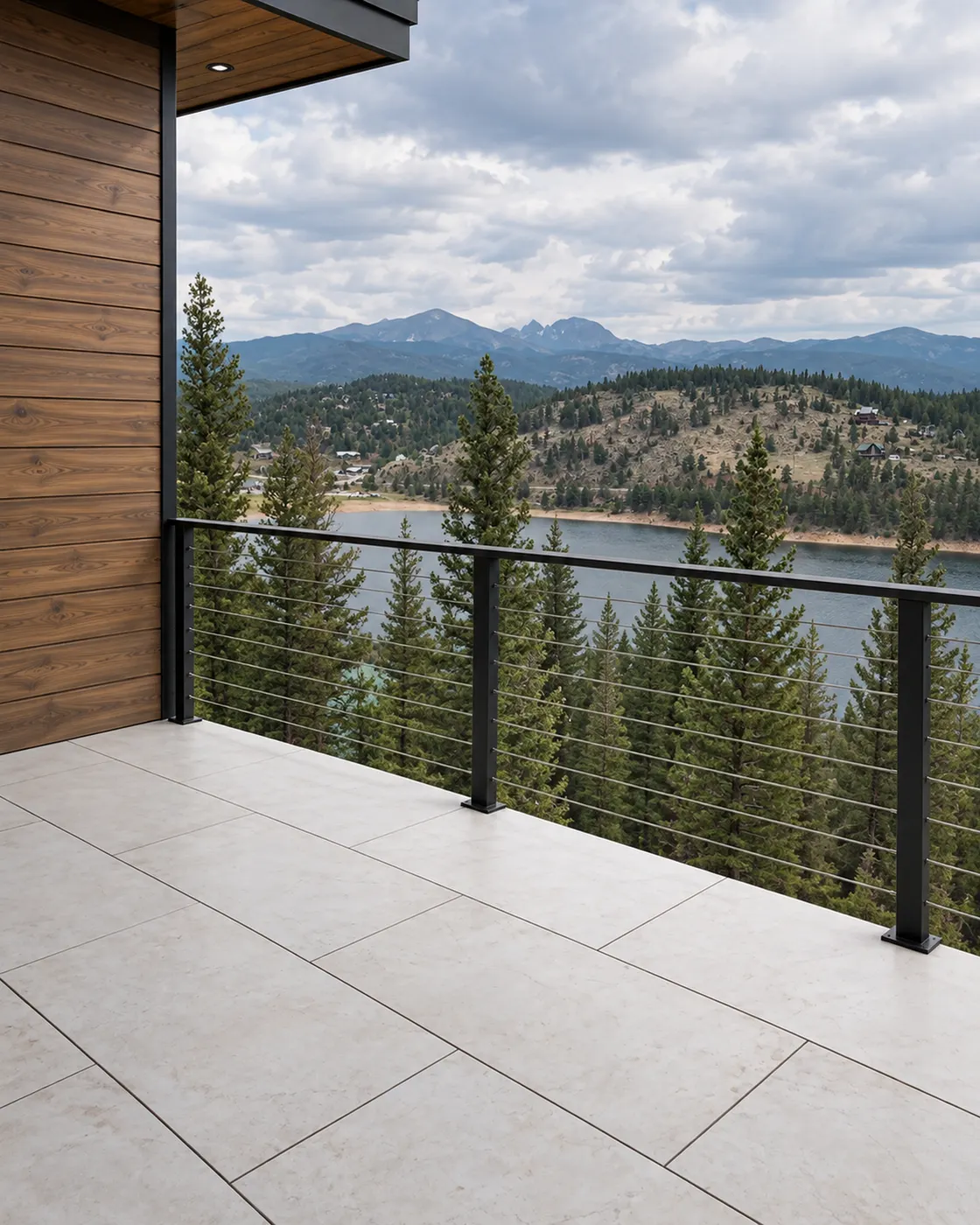
Decks and other exterior structures can ignite, sustain fire, and expose the building to heat, flame, and embers. Resilience depends on how these structures are built, how they connect to the building, and how nearby structures affect its exposure.
Why it matters
Exterior structures can expose a building to fire whether they are attached to it or located nearby. A connected structure can provide a continuous path for fire to reach the building, while a nearby structure can expose it to heat, flame, and embers without touching it.
On a deck, embers can ignite combustible materials on the surface or below it. If the deck catches fire, it can expose nearby walls, windows, doors, and roof edges to sustained heat and flame.
How it fails
- Fire takes hold in the exterior structure. Combustible components can ignite when exposed to embers, heat, or flame. Gaps, intersections, and spaces beneath structures can contribute to ignition and sustained fire, increasing exposure to the building.
- A connected structure carries fire toward the building. A burning exterior structure can create direct heat and flame exposure. Connections to the building can place a developing fire immediately beside walls, windows, doors, eaves, and other parts of the enclosure.
- Fire can transfer from nearby structures or objects. A burning shed, carport, vehicle, or other nearby object can expose the building to heat, flame, and embers without touching it.
What works
- Choose materials and assemblies that resist ignition and sustained burning. Consider how exterior structures will respond to embers, heat, and flame, including exposure from below.
- Reduce places where fire can take hold. Limit ember and debris accumulation at gaps and intersections, and protect exposed framing and spaces beneath structures from ignition and fire spread.
- Interrupt fire pathways at connections to the building. Where decks, fences, pergolas, and other structures connect to the building, look for ways to break the continuity of the fire path rather than allowing combustible construction to lead directly to the building.
- Mitigate exposure from nearby structures. Consider how the location, construction, and relationship of nearby structures could affect your building if they burn.
Where this comes from
- Insurance Institute for Business & Home Safety (IBHS) — Vulnerability of Decks to Embers and Flames (opens in a new tab) — Experimental research on deck exposure to embers from above and flame from below, including deck ignition, substructure vulnerability, and subsequent exposure of the building.
- National Institute of Standards and Technology (NIST) — Fire Spread Pathways (opens in a new tab) — Parcel-level fire pathways involving fences, vehicles, decks, pergolas, sheds, carports, and neighboring structures.
- National Institute of Standards and Technology (NIST) — Hardening Actions: Construction Guidance (opens in a new tab) — Construction guidance addressing vulnerabilities and hardening actions for decks, attached fences, stairs, pergolas, trellises, and related exterior conditions.
- National Institute of Standards and Technology (NIST) — Effects of Wind Speed and Angle on Fire Spread Along Privacy Fences (opens in a new tab) — Experimental research showing how ignited wood fences can carry fire and generate embers that threaten attached or adjacent structures.
- National Institute of Standards and Technology (NIST) — Understanding Structure Ignition Vulnerabilities Using Mock-Up Sections of Attached Wood Fencing Assemblies (opens in a new tab) — Experimental research on firebrand ignition of attached wood fencing and its potential to provide a pathway to structure ignition.
- National Institute of Standards and Technology (NIST) — Structure Separation Experiments (opens in a new tab) — Research on exposures from burning source structures to neighboring residences, including shed and garage fire scenarios and structure separation.
- CAL FIRE Office of the State Fire Marshal — Building in the Wildland (opens in a new tab) — Fire-authority overview of wildfire exposure and current California WUI construction provisions, including projections, decks, accessory buildings, and miscellaneous structures.
Decks & Exterior Structures on video
Watch what fire-resilient details looks in practice
Quick answers
Defensible Space
Routine Maintenance to Reduce Ember Ignition Risk
An overview of how cleaning gutters, spaces beneath decks, and the first five feet around a home reduces combustible debris where wildfire embers can collect.
Watch on YouTube — Routine Maintenance to Reduce Ember Ignition Risk (opens in a new tab)
Watch
Decks & Exterior Structures
Fire-Resilient Balcony Assembly and Joist Protection
A field-built balcony assembly protecting vulnerable wood joists with fire-resistant sheathing, metal flashing, and durable FiberGrate decking for wildfire resilience.
Watch on YouTube — Fire-Resilient Balcony Assembly and Joist Protection (opens in a new tab)
Exterior Walls
Z-Girt Exterior Insulation for Wildfire-Resilient Walls
A field-installed wall system combining mineral wool, polyiso, and commercial Z-girts for wildfire resilience, condensation control, drainage, and thermal performance.
Watch on YouTube — Z-Girt Exterior Insulation for Wildfire-Resilient Walls (opens in a new tab)
Roofing
Fire-Resilient Roof Insulation with Thermally Broken Z-Girts
A field-built roof assembly combining fire-resistant mineral wool with thermally broken fiberglass Z-girts for wildfire resilience, reduced heat loss, and second-deck support.
Watch on YouTube — Fire-Resilient Roof Insulation with Thermally Broken Z-Girts (opens in a new tab)
Which of these matters on your property?
Every home is different. These pages explain what to look for and why it matters, but they are not an assessment of your home or property. What makes sense for you depends on how your home was built, its condition, and what surrounds it. A Fire Resilience Strategy Call is an hour spent working that out for one specific building.
See the Fire Resilience Strategy Call