Roofing
A resilient roof is more than what you see on the surface.
A roof's wildfire resilience depends on more than its covering. The whole assembly matters, including its edges, openings, transitions, and places where combustible debris can collect.
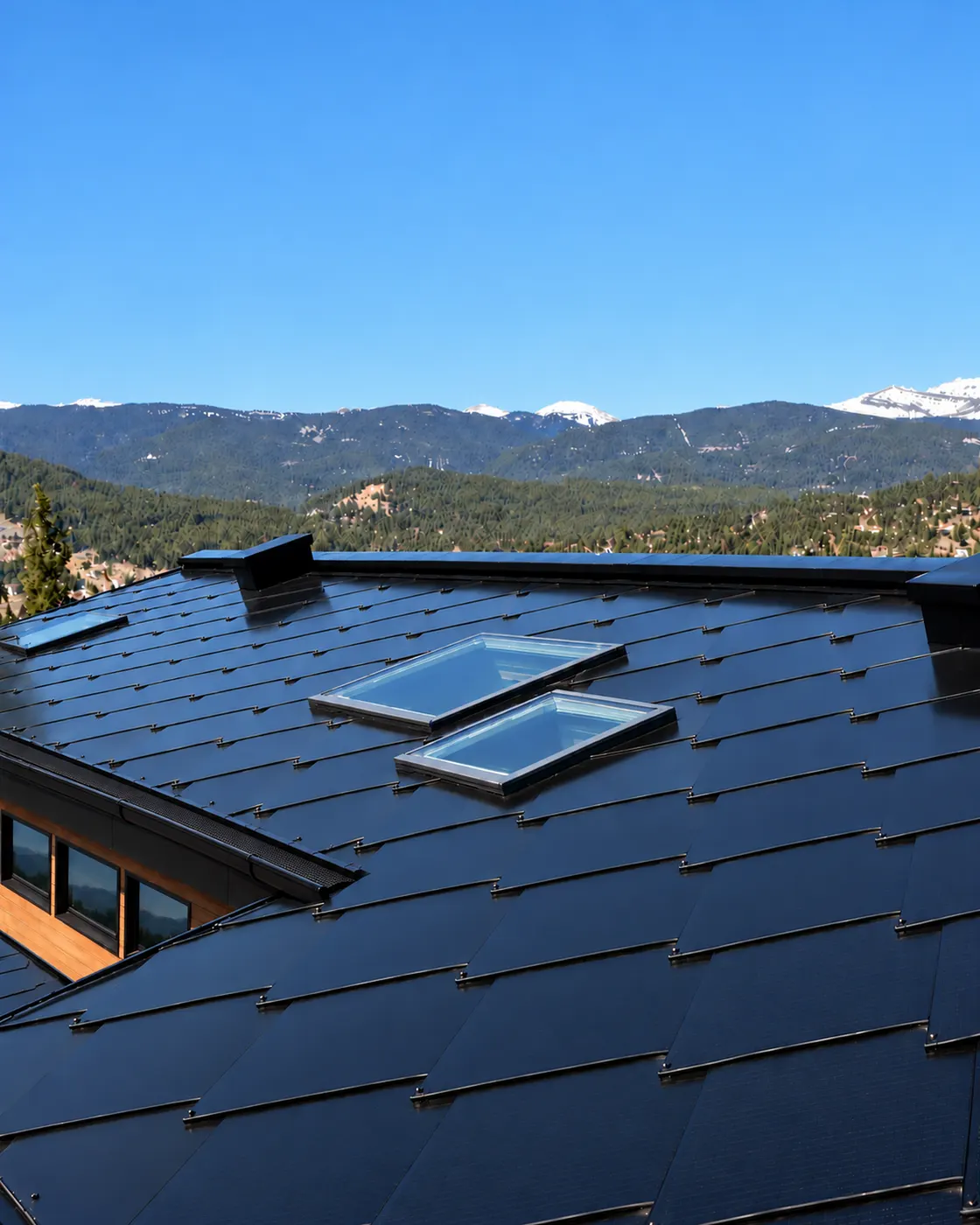
Why it matters
Windborne embers can collect in roof valleys, gutters, and around rooftop features. If leaves, needles, or other combustible debris have accumulated there, embers can ignite that fuel bed and expose the roof or nearby components to fire.
Fire can also reach vulnerable materials at roof edges, eaves, soffits, vents, and other openings or transitions. These details matter because a roof covering that resists ignition cannot, on its own, protect every part of the roof or prevent embers and fire from reaching vulnerable materials within the assembly.
How it fails
- A strong roof covering can hide weaknesses elsewhere in the assembly. Vulnerable materials may remain exposed at edges, transitions, penetrations, gaps, or damaged areas even when the roof covering itself performs well.
- Roof geometry and rooftop features can create collection points. Valleys, gutters, transitions, chimneys, skylights, and other rooftop features can trap combustible debris. Windborne embers can ignite these accumulations, exposing the roof or adjacent components to fire.
- Openings and interfaces can provide paths beyond the visible exterior surface. Gaps and poorly protected transitions or penetrations can allow embers or fire to reach vulnerable materials within the roof assembly.
- The roof edge can expose vulnerable parts of the building. Eaves, soffits, and roof edges can include openings or combustible components exposed to embers, flame, or heat. Their performance depends on both the materials present and how the edge of the assembly is constructed.
What works
- Treat the roof as an assembly, not just a covering. Use an assembly designed to resist ignition, considering what lies beneath the visible surface and where vulnerable materials may become exposed.
- Reduce and strengthen vulnerable collection points. Good detailing can limit places where combustible debris accumulates and protect vulnerable materials where complex geometry cannot be eliminated.
- Protect openings, penetrations, and transitions without defeating their building function. Detail vents, penetrations, flashing, and transitions so they continue to perform their function while limiting paths for embers and fire to reach vulnerable materials.
- Protect the roof edge as part of the assembly. Design eaves, soffits, and roof edges to limit exposed combustible materials and reduce opportunities for embers or flame to reach vulnerable parts of the building.
Where this comes from
- 2025 California Wildland-Urban Interface Code, Chapter 5 (opens in a new tab) — WUI construction provisions addressing roof assemblies, eaves, gutters/downspouts, skylights, and vents.
- NIST Technical Note 2205 — WUI Structure/Parcel/Community Fire Hazard Mitigation Methodology (opens in a new tab) — Science-based structure-hardening methodology addressing ember and fire exposures and component vulnerabilities.
- 2025 Wildfire Prepared Home Technical Standard (IBHS) (opens in a new tab) — Applied building-science requirements addressing roof coverings, roof maintenance, gutters/downspouts, vents, and eaves.
Roofing on video
Watch what fire-resilient details looks in practice
Quick answers
Defensible Space
Routine Maintenance to Reduce Ember Ignition Risk
An overview of how cleaning gutters, spaces beneath decks, and the first five feet around a home reduces combustible debris where wildfire embers can collect.
Watch on YouTube — Routine Maintenance to Reduce Ember Ignition Risk (opens in a new tab)
Watch
Roofing
Fire-Rated EPDM Flat-Roof Assembly: Installation and Repairs
A field-installed fire-rated EPDM flat-roof assembly covering membrane bubbling and repairs, seam bonding, drip edges, and long-term waterproofing details.
Watch on YouTube — Fire-Rated EPDM Flat-Roof Assembly: Installation and Repairs (opens in a new tab)
Roofing
Flat-Roof Exterior Insulation and Waterproofing Assembly
A field-built flat-roof assembly combining mineral wool and polyiso with layered waterproofing and intumescent protection for wildfire resilience and thermal performance.
Watch on YouTube — Flat-Roof Exterior Insulation and Waterproofing Assembly (opens in a new tab)
Roofing
Exterior Roof Insulation for Wildfire-Resilient Homes
A field-built roof assembly combining mineral wool and polyiso for wildfire resilience, thermal performance, waterproofing, and interior comfort.
Watch on YouTube — Exterior Roof Insulation for Wildfire-Resilient Homes (opens in a new tab)
Roofing
Fire-Resilient Roof Insulation with Thermally Broken Z-Girts
A field-built roof assembly combining fire-resistant mineral wool with thermally broken fiberglass Z-girts for wildfire resilience, reduced heat loss, and second-deck support.
Watch on YouTube — Fire-Resilient Roof Insulation with Thermally Broken Z-Girts (opens in a new tab)
Which of these matters on your property?
Every home is different. These pages explain what to look for and why it matters, but they are not an assessment of your home or property. What makes sense for you depends on how your home was built, its condition, and what surrounds it. A Fire Resilience Strategy Call is an hour spent working that out for one specific building.
See the Fire Resilience Strategy Call